The Digital Blueprint: How 3D Modeling Services Streamline the Product Development Lifecycle Today companies face immense pressure to innovate rapidly, reduce costs, and accelerate time-to-market while maintaining impeccable quality. Traditional product development workflows, often reliant on lengthy physical prototyping and sequential hand-offs, can be slow, expensive, and prone to errors. This is where 3D Modeling Services emerge as a transformative force, acting as the digital blueprint that fundamentally streamlines the entire product development lifecycle. By creating precise, versatile, and highly visual digital representations of products, 3D Modeling Services empower designers, engineers, marketers, and manufacturers to collaborate more effectively, iterate faster, and make more informed decisions at every stage, ultimately leading to superior products launched with greater efficiency. The Traditional Bottlenecks in Product Development Before delving into the solutions offered...
Beyond the Catalog Using 3D Product Visualization for Interactive Furniture Selection
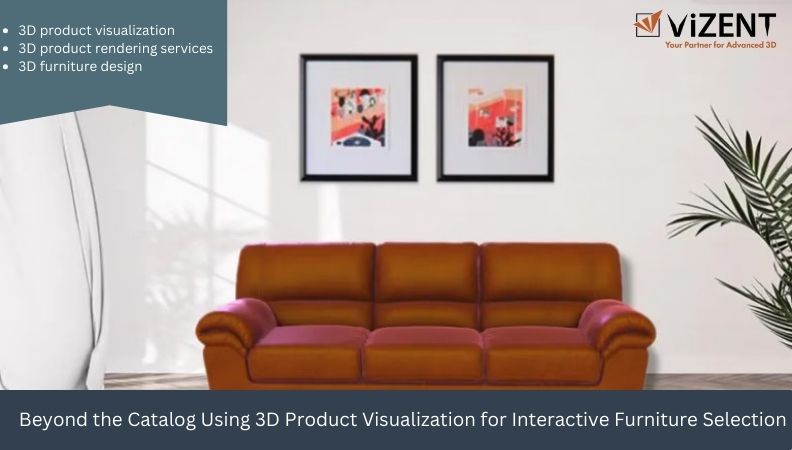
Using 3D Product Visualization for Interactive Furniture Selection
The way we shop for furniture has dramatically evolved over the past decade. From flipping through printed catalogs to browsing endless online listings, consumers now expect a more engaging and personalized shopping experience. This is where 3D product visualization and 3D furniture design come into play, transforming the furniture industry into a dynamic and interactive marketplace.
The Power of 3D Product Rendering Services
3D product rendering services are a game-changer for both furniture retailers and customers. These services use advanced technology to create highly realistic digital representations of furniture, offering unparalleled precision in texture, color, and dimensions. For businesses, this means eliminating the need for costly photoshoots while providing customers with a virtual experience that mirrors reality.
Imagine shopping for a new sofa. Instead of guessing how it will look in your living room based on a static image, you can now rotate, zoom in, and even change the upholstery in real-time, thanks to 3D product visualization. This interactivity doesn’t just enhance the shopping experience—it builds confidence in purchasing decisions, reducing returns and boosting customer satisfaction.
Customization Through 3D Furniture Design
One of the most significant advantages of 3D furniture design is its ability to offer endless customization options. Consumers are no longer limited to what’s available in stock. With 3D tools, they can experiment with different fabrics, finishes, and configurations to create a piece that perfectly fits their style and space.
Retailers benefit as well. By showcasing 3D furniture models online, they can cater to a broader audience without the need for a massive inventory. This not only reduces storage costs but also opens up opportunities for creative collaborations and unique product lines.
Interactive Furniture Selection: A Win-Win Solution
The integration of 3D product rendering services into the furniture selection process creates a win-win situation for retailers and customers. Retailers can leverage data from customer interactions to identify trends and optimize their offerings. Customers, on the other hand, enjoy an engaging shopping journey that’s tailored to their individual needs.
For instance, augmented reality (AR) applications allow shoppers to place 3D furniture models into their actual living spaces, bridging the gap between imagination and reality. Whether you’re furnishing a compact apartment or a sprawling home, this technology ensures that your chosen pieces will fit seamlessly into your life.
Future Trends in 3D Furniture Design and Visualization
Virtual reality (VR) showrooms, AI-driven recommendations, and hyper-realistic visualizations are just the beginning.
Investing in 3D product rendering services is no longer a luxury for furniture brands—it’s a necessity. Companies that embrace this technology will stay ahead of the curve, offering innovative solutions that meet the ever-growing demands of modern consumers.
Conclusion
Gone are the days when furniture shopping was limited to static images and uninspiring catalogs. Thanks to 3D product visualization, customers can now interact with 3D furniture models in ways that were unimaginable just a few years ago. By integrating 3D furniture design and rendering services, businesses can elevate their offerings, foster customer loyalty, and set new standards in the industry.
Comments
Post a Comment