The Digital Blueprint: How 3D Modeling Services Streamline the Product Development Lifecycle Today companies face immense pressure to innovate rapidly, reduce costs, and accelerate time-to-market while maintaining impeccable quality. Traditional product development workflows, often reliant on lengthy physical prototyping and sequential hand-offs, can be slow, expensive, and prone to errors. This is where 3D Modeling Services emerge as a transformative force, acting as the digital blueprint that fundamentally streamlines the entire product development lifecycle. By creating precise, versatile, and highly visual digital representations of products, 3D Modeling Services empower designers, engineers, marketers, and manufacturers to collaborate more effectively, iterate faster, and make more informed decisions at every stage, ultimately leading to superior products launched with greater efficiency. The Traditional Bottlenecks in Product Development Before delving into the solutions offered...
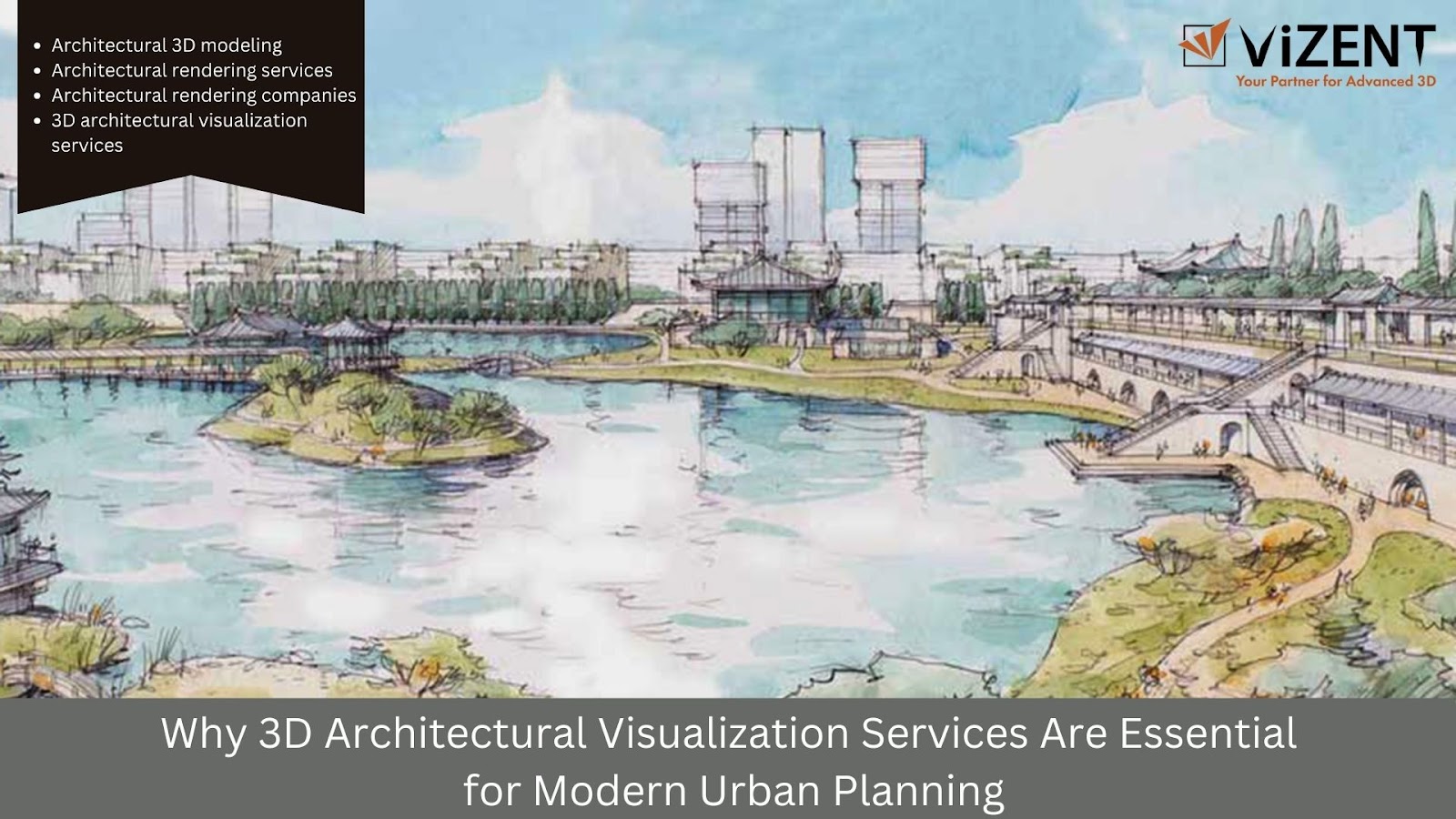
3D Architectural Visualization Services
The evolution of urban planning has seen a significant shift toward digital technology, and 3D architectural visualization services have emerged as a vital component in this transformation. These services provide urban planners, architects, and developers with realistic visual representations of projects before construction begins. By leveraging architectural rendering services, cities, and communities can be meticulously planned with accuracy, efficiency, and improved stakeholder communication.
The Role of 3D Architectural Visualization in Urban Planning
Urban planning involves creating sustainable, functional, and aesthetically appealing cityscapes. Traditional 2D blueprints and sketches no longer suffice in conveying the intricate details of architectural designs. Here’s why architectural 3D modeling is essential:
1. Enhanced Project Visualization
3D architectural visualization services enable architects and planners to convert conceptual designs into photorealistic models. These models offer a detailed perspective on how buildings, roads, and green spaces will integrate into the urban landscape.
Helps architects present designs more convincingly.
Offers an immersive experience for investors and stakeholders.
Allows adjustments before construction, reducing costly mistakes.
2. Improved Communication Among Stakeholders
Effective communication is crucial in urban planning. With architectural rendering services, planners can visually communicate their ideas to clients, government authorities, and construction teams.
Creates a common ground for discussion.
Helps investors understand the project scope.
Reduces misunderstandings that may lead to project delays.
3. Sustainable and Smart City Development
Sustainability is a key focus in modern urban planning. 3D architectural visualization services allow designers to integrate eco-friendly elements such as solar panels, green roofs, and efficient water management systems into their projects.
Simulates real-world environmental impact.
Aids in designing energy-efficient buildings.
Enhances planning for green spaces and public areas.
4. Cost and Time Efficiency
The use of architectural rendering companies helps reduce both time and expenses in the planning phase. By detecting design flaws early, these companies help developers avoid costly construction modifications.
Minimizes material wastage.
Accelerates project approvals with clear presentations.
Reduces rework due to planning errors.
The Role of Architectural Rendering Companies
Several architectural rendering companies specialize in creating high-quality visualizations. These firms employ advanced tools such as 3D modeling software, AI-powered design assistance, and virtual reality walkthroughs to provide comprehensive planning solutions.
How These Companies Add Value:
Utilize cutting-edge technology to create detailed 3D models.
Offer virtual tours to enhance client engagement.
Provide marketing materials that help real estate developers attract buyers.
Future Trends in Architectural 3D Modeling
With advancements in technology, architectural 3D modeling is evolving rapidly. Some future trends include:
1. Virtual Reality (VR) and Augmented Reality (AR)
VR and AR allow stakeholders to experience designs in a fully immersive environment, leading to better decision-making.
2. AI-Powered Design Optimization
Artificial intelligence is now being used to refine designs, ensuring functionality and sustainability.
3. Cloud-Based Collaboration
Cloud platforms enable real-time collaboration, making it easier for architects and urban planners to work together from different locations.
Conclusion
In the modern era, 3D architectural visualization services are indispensable for urban planning. They bridge the gap between conceptualization and execution, ensuring projects are visually compelling, sustainable, and efficiently executed. Architectural rendering services, architectural rendering companies, and architectural 3D modeling collectively contribute to better-planned, more livable cities. As technology continues to advance, these visualization services will play an even more significant role in shaping the future of urban development.
Keywords:-
Read More….
Comments
Post a Comment