The Digital Blueprint: How 3D Modeling Services Streamline the Product Development Lifecycle Today companies face immense pressure to innovate rapidly, reduce costs, and accelerate time-to-market while maintaining impeccable quality. Traditional product development workflows, often reliant on lengthy physical prototyping and sequential hand-offs, can be slow, expensive, and prone to errors. This is where 3D Modeling Services emerge as a transformative force, acting as the digital blueprint that fundamentally streamlines the entire product development lifecycle. By creating precise, versatile, and highly visual digital representations of products, 3D Modeling Services empower designers, engineers, marketers, and manufacturers to collaborate more effectively, iterate faster, and make more informed decisions at every stage, ultimately leading to superior products launched with greater efficiency. The Traditional Bottlenecks in Product Development Before delving into the solutions offered...
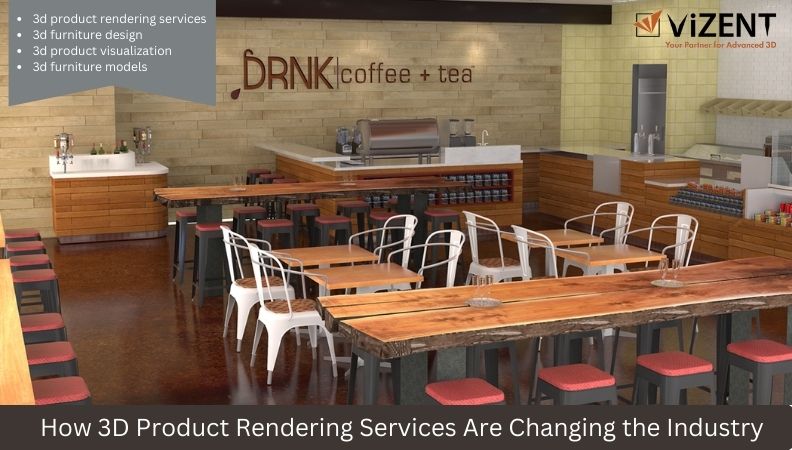
Utilizing 3D Rendering Services to Revolutionize Product Design
Visual appeal is vital to marketing and sales in the current digital world. Brands now use 3D product rendering services to produce hyper-realistic graphics and animations because traditional product photography is insufficient. These technologies, which range from 3D furniture design to comprehensive product visualization, are completely changing how companies show their goods to consumers.
1. What Are Services for 3D Product Rendering?
Using cutting-edge technologies, 3D product rendering services produce photorealistic digital pictures of products. By removing the need for costly physical prototypes and photo shoots, these images enable companies to showcase their goods in the best possible way.
2. Why 3D Furniture Design Is Important
3D furniture design has countless opportunities for the furniture sector. Designers can showcase various materials, colors, and textures by producing realistic depictions of chairs, tables, sofas, and other furniture. Before production starts, this enables customers and manufacturers to see the finished product.
3. The Marketing Benefits of 3D Product Visualization
By offering dynamic and comprehensive product views, 3D product visualization improves the customer experience. This method is frequently employed in branding, interior design, and e-commerce to assist clients in making well-informed purchases. Important advantages include:
Excellent Visuals:
Ideal for catalogs and internet stores.
Customization Options:
A variety of materials, colors, and styles are available to customers.
Cost-effective:
Cuts down on the number of physical prototypes required.
4. 3D Furniture Models' Function in Interior Design
Virtual staging and interior design both heavily rely on 3D furniture models. Designers and architects can assist clients see how furniture fits into a space by precisely placing items in digital surroundings using detailed models. For more immersive experiences, these models are also utilized in AR and VR applications.
5. Upcoming Developments in 3D Product Rendering
With new technology like these, 3D product rendering services have a bright future.
Streamlining the design process to produce outcomes more quickly.
Customers are able to install 3D furniture models in their houses thanks to augmented reality (AR).
Real-time rendering allows for quick changes and rapid visualization.
In conclusion
Services for 3D product rendering are revolutionizing how companies market and sell their goods. Advanced 3D furniture design, realistic 3D product visualization, and intricate 3D furniture models enable firms to provide clients with immersive and captivating experiences. For companies looking to differentiate themselves in a crowded industry, investing in these innovative solutions is revolutionary.
Comments
Post a Comment