The Digital Blueprint: How 3D Modeling Services Streamline the Product Development Lifecycle Today companies face immense pressure to innovate rapidly, reduce costs, and accelerate time-to-market while maintaining impeccable quality. Traditional product development workflows, often reliant on lengthy physical prototyping and sequential hand-offs, can be slow, expensive, and prone to errors. This is where 3D Modeling Services emerge as a transformative force, acting as the digital blueprint that fundamentally streamlines the entire product development lifecycle. By creating precise, versatile, and highly visual digital representations of products, 3D Modeling Services empower designers, engineers, marketers, and manufacturers to collaborate more effectively, iterate faster, and make more informed decisions at every stage, ultimately leading to superior products launched with greater efficiency. The Traditional Bottlenecks in Product Development Before delving into the solutions offered...
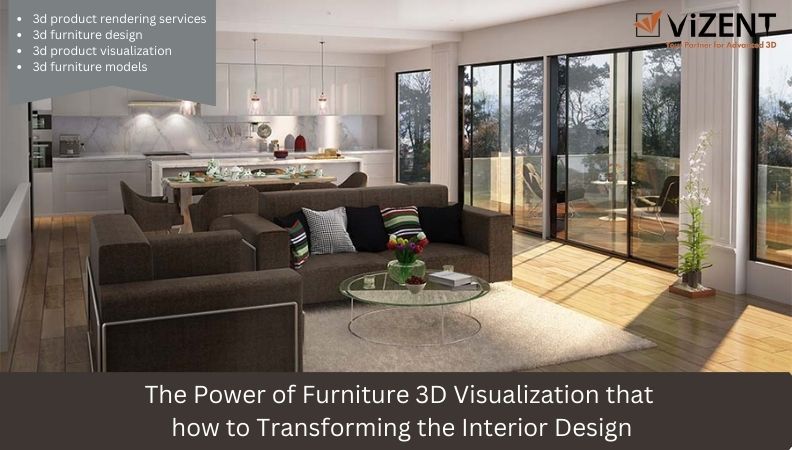
How to Transform Interior Design?
Furniture 3D visualization has completely changed how designers, manufacturers, and consumers engage with furniture designs in the current digital era. Businesses can reduce costs and increase productivity by using cutting-edge technology to produce realistic and detailed furniture representations prior to manufacture.
1. Comprehending 3D Visualization of Furniture
The method of employing specialist software to digitally create realistic representations of furniture components is known as 3d product visualization. Before furniture is actually produced, designers and buyers can use these visualizations to study textures, see furniture from various perspectives, and make well-informed design decisions. In furniture design, this technology improves originality, accuracy, and personalization.
2. 3D Product Rendering Services' Function
Businesses can get excellent visual representations of their furniture designs with 3D product rendering services. These services create lifelike photos by simulating lighting, materials, and textures using sophisticated rendering techniques. Better marketing and sales potential result from manufacturers and retailers showcasing their items more efficiently.
3. Using 3D furniture design to improve design
Before furniture is constructed, designers can virtually build, alter, and test models using 3D furniture design. Without the need for actual prototypes, designers can experiment with various forms, materials, and styles by using digital prototypes. This lowers costs and speeds up the design process, guaranteeing that the finished product satisfies functional and aesthetic standards.
4. The Effects of Visualizing Products in 3D
Businesses can display furniture products in an interesting and interactive manner by using 3D product visualization. Businesses can build dynamic presentations with 360-degree images and animations using 3d furniture design rather than standard photography. Especially in the e-commerce sector, this immersive strategy raises customer involvement and improves the whole buying experience.
5. Why 3D Furniture Models Are Important
Virtual reality applications, design creation, and marketing can all benefit from the utilization of 3D furniture models as digital assets. Better spatial planning and visualization are made possible by the comprehensive representations of furniture components that these models give manufacturers, architects, and interior designers. With a comprehensive library of 3D models, firms may speed the design process and boost cooperation between teams.
6. 3d furniture model’s Future
3d furniture models appear to have a bright future as long as technology keeps improving. The visualization process is becoming more dynamic and effective with the integration of virtual reality, real-time rendering, and artificial intelligence. 3d furniture models will become a vital tool in the furniture business as a result of these advancements, which will also increase product customisation, shorten the time needed for design iterations, and better the entire consumer experience
In conclusion
The design, presentation, and sales of furniture are being revolutionized by 3D visualization. Businesses may produce eye-catching digital experiences that engage customers and expedite production by leveraging 3D models, furniture design, product visualization, and 3D product rendering services. The future of interior design and manufacturing will be significantly influenced by furniture 3D visualization as technology advances.
Comments
Post a Comment